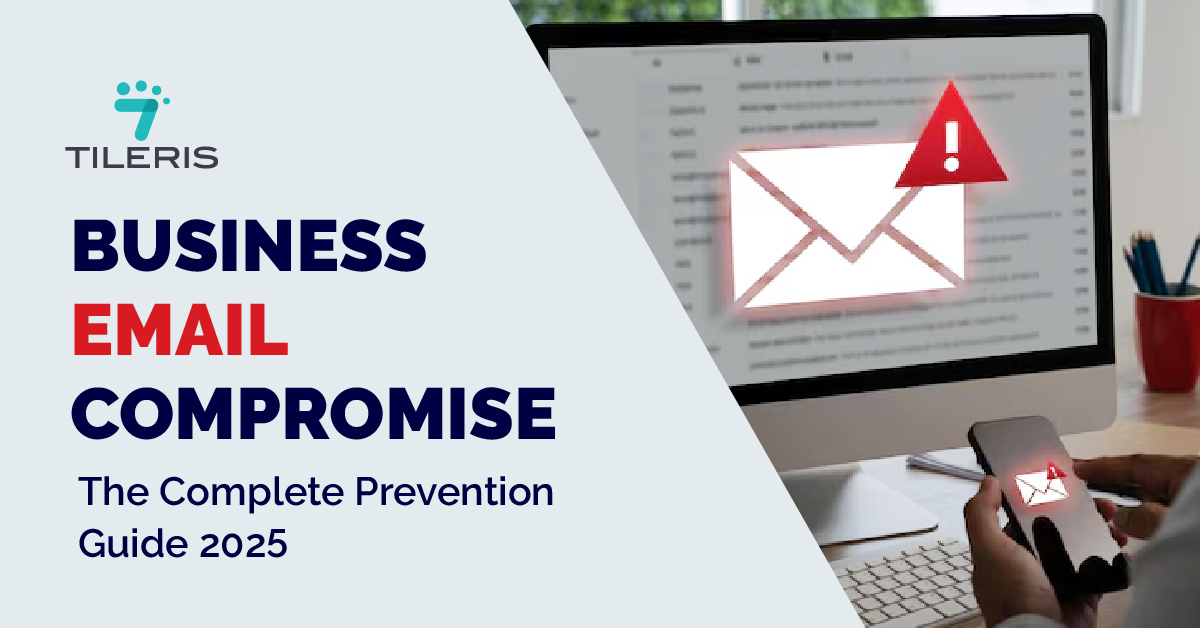
Business Email Compromise: The Complete Prevention Guide 2025
Introduction
If you’re reading this, there’s a good chance you’re concerned about Business Email Compromise (BEC), and rightfully so.
In 2025, BEC isn’t just another cyber threat; it’s the cyber threat. It doesn’t rely on sophisticated code or malware, it relies on something much simpler (and scarier): human trust.
Let’s break it down in plain English and talk about how you can actually prevent BEC attacks from draining your company’s bank account or damaging your reputation.
What Exactly Is Business Email Compromise?
Imagine you get an email from your CEO asking for an urgent wire transfer. It sounds like them. It looks like them. But guess what? It’s not. That’s BEC.
Business Email Compromise is when a scammer tricks someone, usually through a real-looking email into doing something harmful, like sending money, sharing sensitive data, or giving access to company systems.
These attacks don’t always come with flashy red flags or dodgy email addresses. They’re subtle, calculated, and incredibly convincing. And they work.
According to the FBI, BEC attacks have cost businesses billions. We’re not talking small scams here, these are well-planned heists.
Why Is BEC Still a Huge Problem in 2025?
Technology keeps evolving, yes, but so do attackers. They’re not sitting around guessing passwords, they’re studying your company, your communication style, even your social media posts. The more they know, the more real their emails seem.
BEC thrives because it preys on people, not systems. And people, no matter how smart or trained, make mistakes.
So, what can you actually do to protect your business? Let’s talk prevention, the stuff that actually works.
1. DMARC, SPF, and DKIM
If those acronyms make your eyes glaze over, hang tight. These email authentication protocols help verify that emails sent from your domain are actually from you. We’ve deep dive articles on this concepts you can check them out for more insight.
Think of it as adding a signature to your emails that proves their legitimacy. When properly set up:
- SPF (Sender Policy Framework) tells the internet which mail servers can send email for your domain.
- DKIM (DomainKeys Identified Mail) adds a cryptographic signature to your emails.
- DMARC (Domain-based Message Authentication, Reporting & Conformance) ties it all together and tells receiving servers what to do if an email fails checks.
In 2025, using DMARC is non-negotiable. If you haven’t set it up yet, that’s like leaving your office door wide open at night.
2. Train Like You Mean It
Let’s be real, one boring PowerPoint presentation isn’t going to make your team BEC-proof. Cybersecurity awareness should be ongoing and practical.
Show your team real-world examples of phishing emails. Test them. Keep them on their toes, but also make it okay to ask questions.
And here’s the thing, don’t just focus on junior staff. Executives are actually more likely to be targeted because they have the authority to move money. Everyone, from intern to CEO, needs to be in the loop.
3. Slow Down the Money
BEC thrives on urgency. “Please wire this now.” “I need this payment in 10 minutes.” You’ve seen those emails.
One simple fix is to build in verification protocols for financial transactions. That might mean a quick call to the requester, a second set of eyes on large transfers, or a 24-hour review period.
Yes, it slows things down a bit, but trust so does dealing with the fallout of a six-figure scam.
4. Use Email Security Software That’s Actually Smart
Spam filters are great, but they’re not enough. In 2025, we’ve got AI-powered email security platforms that can spot impersonation attempts, weird language patterns, and changes in email behavior. These tools can flag that “weird but not obviously fake” email before a human clicks on it.
We recommend tools like Abnormal Security, Mimecast, and Proofpoint not because they pay us (they don’t), but because they’ve been tested, used, and praised by businesses like yours. They get smarter over time and adapt to your organization’s unique communication style. That’s exactly the kind of ally you want on your side.
5. Know What to Do If (When) It Happens
Even with all the precautions in place, no defense is perfect. If your organization falls for a BEC attack, quick action matters.
Report it to your bank immediately, there’s a small window where transfers can be recalled. Notify law enforcement like the FBI’s Internet Crime Complaint Center if you’re in the U.S. Then inform your security team and begin damage control.
Oh, and take time to learn from it. What failed? What warning signs were missed? One incident, if handled correctly, can strengthen your entire system.
BEC Prevention Isn’t Optional Anymore
This isn’t about checking a compliance box, it’s about protecting your people, your money, and your company’s future.
BEC isn’t going away in 2025. If anything, it’s getting more sophisticated. But with the right blend of technology, awareness, and policies, you can make your business a much harder target. Because when it comes to cyber threats, the best offense is a solid defense.
Conclusion
The fight against BEC will keep evolving. Scammers are using new tricks, including AI to make their emails even more convincing and even to potentially mimic voices. That’s why staying informed, constantly updating our defenses, and fostering a security-aware culture within our teams is an ongoing effort. Think of it like staying fit, it’s not a one-time thing, but a continuous commitment to keep ourselves protected.
Why do we believe these steps are the best approach? Because they tackle the problem from all angles, the human element, the technological landscape, and the crucial internal processes that govern how your business operates. By empowering your employees to be vigilant, implementing robust technical safeguards, and establishing clear, cautious procedures, you’re building a resilient defense that makes it significantly harder for those BEC scammers to succeed. It’s about creating a culture of security where everyone plays a part in keeping your business safe.
Ready to Strengthen Your Cybersecurity?
Feeling more prepared to tackle BEC threats after reading this? That’s great! Now, why not take the next step and truly fortify your defenses?
Want to take your cybersecurity to the next level? Start by downloading our free security checklist. It’s packed with simple, actionable steps to help you stay protected online, giving you a clear roadmap to a more secure future. Just head over to tileris.com to grab your copy and start building your defense.
If you’re looking for more hands-on support and expert guidance tailored specifically to your business, you can also request a free consultation. Our cybersecurity experts are ready to discuss your unique needs and help you implement the robust protections you deserve.
Or, if you’d rather see how Tileris’ solutions work in real time and how they can directly benefit your organization, go ahead and request a demo through our contact form. See firsthand the power of proactive cybersecurity designed for the challenges of 2025.